Sunday, October 4, 2009

Beth Still's Professional Learning Network

Professional development in the Web 2.0 World of cloud computing is as personal as it is professional -- each person connects with others to learn and grow according to his/her goals for their work in the classroom. I recognize most of the people in her video as resources in my PLN, although this is Beth's world. How do you learn in yours?

Saturday, August 22, 2009

Glogster: Web 2.0 Education Wikispaces

Want to know more about Web 2.0 tools? Play around with these --


Joyce Valenza Ph.D, Library Information Specialist, created a wikispaces with much information to start your journey. Click on the Glogster below to link to a tool of interest to you.

Other sites by Joyce:
http://www.sdst.org/shs/library/jvweb.html

http://www.schoollibraryjournal.com/blogger/2694.html


Glogster: Web 2.0 Education

From:
Ludmilla
Newburgh, NY, United States
Associate Professor, Division of Education, Mount Saint Mary College --


http://milasunshine.blogspot.com/2009/05/glogster.html


My comment:

Thanks for creating the wonderful glog, Ludmilla! In college, relevance and interactivity is everything to engage learners. And students at all levels are demanding this -- otherwise they tune out. At high school, middle school, and elementary school, students are tuning out. As kids, though, they don't know what is relevant, so it is up to teachers to create projects that include those skills and strategies relevant to a student's future, yet also capture the student's interest and curiosity so students participate and learn what they don't think us relevant. It's a curious dilemma, don't you think?

Friday, July 24, 2009

Be the change...


In the Teach Paperless Blog the author wrote about "The Top Eleven Things All Teachers Must Know About Technology," encouraging schools to open up the use of the technology tools our students already use so that they are responsible and prepared for their future, not stuck in our past.

The author stated, "...be encouraged about what your teaching will let tomorrow look like," for which I replied, "We've got to open the door to open the mind to education and learning again. The kids are demanding it in their apathy. Do imagine what the "cloud" connectiveness will involve IF we start digital citizenship today. And absolutely, we need universal WiFi Internet access-- all of us need access so all of us have the opportunities to enrich our lives, our world, and our relationships. Imagine."

The students I teach need as much opportunity and responsible use as those who can afford the new technology -- this is the future, and the opportunity must be made available to all to alleviate the oppotunity gap.

For more information for educators watch this one hour NECC 2009, ASCD/ISTE presentation about School 2.0: Link: https://admin.acrobat.com/_a729309453/p75085137/

Students today need to be creative problem solvers and excellent communicators. Many kids already practice this in their mix-up, mash-up, paradied presentations on YouTube. Wouldn't it be nice if we could guide them in the kind of responsive citizenship that encourages democracy and acceptance? And shouldn't all kids have access to these skills of their future?

Watch this brief video by ASCD explaining how technology for 21st Century skills fits in our schools today:


Link here if not visible.


Remember "I touch the future. I teach." by— Christa McAuliffe? Imagine if we do open the options and engage students with what is truly their world: online, connected, and personal networks. Let's not be afraid, lets "...be encouraged about what your teaching will let tomorrow look like." We are touching the future by our decisions today -- what footprint will we leave?

Let's build the future...


Photo Credits
Classroom (CC Flickr by Camera Wences)
Kid Backpack Inventory (CC Flickr by lindseywb)

Wednesday, July 22, 2009

I have this one teacher...

Reflectin on Chapters 1-3 from
Tom Newkirk's
"Holding on to Good Ideas in a Time of Bad Ones:
Six Literacy Principles Worth Fighting For."


Managing a Small Crowd -- and Learning! CC Flickr Photo by Sean O'Sullivan


Most people -- most people who manage-- do not have twenty to thirty of their employees responding to them and interacting together at the same time all day long. Years ago, my husband just reminded me, the optimal number for a manager to manage was seven (7)! Teachers constantly manage a small crowd. In middle and high schools, that crowd changes every fifty minutes. And that's a crowd of children or adolescents. (The video about "herding cats" comes to mind).

Our kids come to us, emotions already tinged by the moment, morning, or night before. They are kids; they don't leave their social baggage behind. In order to manage the crowd, teachers must "take into account the whole situation, including the emotional state of the patient"--- except teachers face twenty to thirty patients at one time for each class. Social needs, social groups, that day's social/emotional group, health needs, personalities, and then learning styles: the teacher is constantly in the "instant," "knowing more than they can describe," taking "intelligent action" ("knowing in action") to manage the crowd and the individuals so the students as a class and as individuals can learn. All the while, the teacher translates the individual student's pattern and needs for learning. Each moment of every class is a dance to the tune of student emotional, physical, and learning needs. Classrooms are "unsettled scores," to which the teacher orchestrates learning. Teachers "know-how is in the action," gathering
and acting on "'micro-theories,' the subtle intuitions and perceptiveness of teachers in the midst of their work."

And some bureaucrat thinks, even though Johnny lost his mom in a car crash two years ago and his dad committed suicide last year, that he will be at the fifth grade level in math, reading, writing, and science just like every other robot they think we teach. The problems kids deal with need not even be through the trauma of losing family, kids are human: their real world is first in their minds; academia floats in when the teacher has alleviated all the physical and social needs. That's what bureaucrats and most outsiders forget. And how the brain learns, how kids learn? Most of them (bureaucrats and outsiders) don't know, but they do know what they want to be done to kids, not for or with kids (kids -- through adolescence). Parents keep teachers tuned to the student; they want teachers to focus on the needs of their kids, which must be done in that small crowd, when we finally have reflection time with colleagues and we can say, "I have this one student..."

After six periods of teaching (after managing small crowds), the time for careful reflection occurs. Actually, that happens after phone calls, after tidying up the classroom, after putting away today's work and preparing for what probably will be the work for tomorrow, and after teaching meetings, (which by now is way past my teacher contract day), now I can analyze the work of the day. For elementary teachers that is a classroom set of data for each subject, or for secondary teachers that's six or seven sets of papers from the different periods in their day-- either way, it's a stack of papers, notes, or online work.

What does productive educational leadership look like?

* Orchestrate with staff a vision for the school that allows each teacher and each student to shine-- differences united
* Orchestrate personal learning networks for teachers and students
* Create the time for teachers to to "frame the case" --to analyze the daily work to fine-tune their "instant" classroom assessment and feedback so each child can learn
* Support and provide resources and professional development from the evidence the teachers bring with what is needed in their classrooms for their kids to learn
* Encourage and support authentic audiences for student projects
* Support art, music, drama, etc.
* Limit the paperwork required for mandates -- for learning, allow teaching, not paper filing
* Understand the whole teacher and the whole child, and let them breathe-- and
* Let classrooms be real -- part of the world and the community

Let them breathe in fresh ideas needed at that moment for each of them-- skipping the teacher's diagnosis for that instant in the crowd denies the needs of a student (times twenty or thirty) over the mandates of today; those mandates will not matter in the future if this learning, today, deemed by the "intelligent action" of the teacher deflates the humanity of our students and turns them from participation in the classroom, the representation of participation in our democracy

Let classrooms be real -- part of the world and the community, an experience of ongoing learning based on the local needs of the community. As John Dewey explained, “Education is not a preparation for life; education is life itself.” We learn and teach the information that is "standard" today, but each child may grow from a different point and from so much more--learning and growing emotionally, socially, academically! --so much more that is not "accountable" in the "proving game" of mandates. However, the students are "improving." Support the teachers' "knowing in action," and support the students' "learning in action." See and support us all as we grow in personal learning networks, life-long learners all.

Think of educational leadership as "I have this one teacher..." and the learning will follow.

[See "Proving While Improving", ASCD Whole Child Newsletter http://www.wholechildeducation.org/resources/newsletter.jhtml?id=37653 ]

A Class of Ben by CC Flickr benisntfunny
Even if we were a Class of Ben: look at the variety!


First blogged here on the English Companion Ning

Monday, January 19, 2009

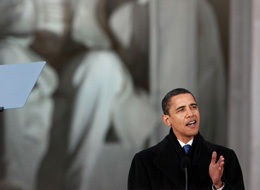
HuffPost Video: "Our Inauguration"


We the people...

The idea of all of us taking the oath to uphold the Constitution creates a responsibility to participate actively in our democracy and to also make certain those elected uphold its precepts.


We the people...

are diverse in our views and beliefs, yet we can all participate responsibly when needed. That includes understanding that some people will take this "oath" vision and run with the ideals, while others will skeptically remind us of the details. A democracy is collaboration, and I recently read a wonderful post that reminds us that collaboration means participation, communication, acceptance, and "making our partner's work look good." So, despite our differences, our goal is to become better, to add to each others' ideas and projects to be "America the Beautiful."


Post reference: http://www.cmduke.com/2008/11/explaining-collaboration-to-learners/


I like what marijam said: "We're in this together, but you need to help yourself too."

Thanks to poshman for this history link I will share with my students.


I take the oath!
About Obama's Inauguration
Read the Article at HuffingtonPost

Sunday, December 28, 2008

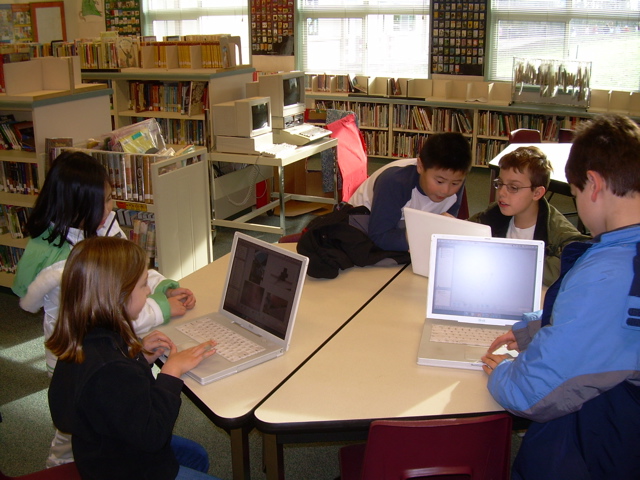
Why call for connected classrooms?

Why call for connected classrooms?

A connected classroom utilizes the current social activities of the web -- cell phones, wiki collaboration, social networks, videos, blogs and comments, etc. -- to engage students in thoughtful conversations of learning.

It's not just the future pulling us forward, it's the need that pull presents us: nuggets of knowledge require critical contemplation.

Our interconnected students click and choose, skim and sort, and decide and delete. Many jump to the next thought with only a glimmer of slim knowledge to support the development of who they are.

So, notwithstanding the motivation of Web 2.0 engagement, why should schools embrace these tools?

Consider what is supposedly lost according to this recent research:


"The kind of deep reading that a sequence of printed pages promotes is valuable not just for the knowledge we acquire from the author’s words but for the intellectual vibrations those words set off within our own minds. In the quiet spaces opened up by the sustained, undistracted reading of a book, or by any other act of contemplation, for that matter, we make our own associations, draw our own inferences and analogies, foster our own ideas. Deep reading, as Maryanne Wolf argues, is indistinguishable from deep thinking...

As New York University professor Clay Shirky notes, 'Most of the arguments made against the printing press were correct, even prescient.' But, again, the doomsayers were unable to imagine the myriad blessings that the printed word would deliver...

In the world of 2001, people have become so machinelike that the most human character turns out to be a machine. That’s the essence of Kubrick’s dark prophecy: as we come to rely on computers to mediate our understanding of the world, it is our own intelligence that flattens into artificial intelligence."

"What the Internet is doing to our brains--Is Google Making Us Stupid?" Nicholas Carr. The Atlantic Online. July/August 2008


I agree. To read undistracted, thinking and analyzing, creating the "mind movies" of understanding seems lost in hyperlinked snippets of perhaps unreliable texts from which perhaps questionable beliefs add to the development of a student's character; the linked world as peer pressure lends a fragile film of knowledge -- a shell onto which the world view is based.

Yet, is something different happening also? In their texting and MySpace/Facebook/Ning world, are those comments and blogs adding a thoughtful discourse for clarifying how the world works, how the world did work, and how to BE in the world?

I wonder if anyone is studying that aspect?

So why connected classrooms?

To educate! -- from educere "to lead" -- to lead students into the critical contemplation of an educated citizen in a global, connected world. The tools are there: Diigo, delicious, Google, Google Notebook, to name a few. The strategies run the system: tag/label, network, comments, summarize, share, questions. Let's apply them in ways that encourage students to synthesize their world into more meaningful memes.

In 1897, John Dewey wrote, "I believe, therefore, that the true center of correlation on the school subjects is not science, nor literature, nor history, nor geography, but the child's own social activities." Our students' lives are public and social networks; if we are to lead them, Dewey's prescience provides the reason we must be connected in schools: we must include those social activities in order to engage their energy to lead them to deeper thinking.

Why call for connected classrooms?

The Socratic pedagogy of questioning continues -- we question from their interests and activities; we ask for more information; we pour over their research and ponder together for deeper understanding. By leading students further into their formerly haphazard "click, skim, click, decide, click, delete", we help them find the nuggets that matter as they bookmark, tag, share, discuss, evaluate, analyze, and apply. We encourage the vehicle for the concentrated contemplation that reading on paper once provided.*

We can barely imagine the power of this connected knowledge, that which the doomsayers cannot even envision. To prevent flattened knowledge, schools must get connected.

Another recent article strikes at the physical aspects of the Internet:


"The physical manipulations we have to do with a computer, not related to the reading itself, disturb our mental appreciation, says associate professor Anne Mangen at the Center for Reading Research at the University of Stavanger in Norway...'Learning requires time and mental exertion and the new media do not provide for that,' Mangen believes."

The University of Stavanger. "Storybooks On Paper Better For Children Than Reading Fiction On Computer Screen, According to Expert." ScienceDaily 22 December 2008. 28 December 2008 .


That is precisely why schools must join the connection: to engage students in the time and thought required to evaluate and synthesize information and stories, and to use the physical manipulation to their advantage for careful consideration of what is seen/heard/read/ on the Internet. We need to rethink many things:


Rethink deep thinking: Truly deep thinking occurs on issues that matter -- which brings us back to Dewey and the Socratic Questioning Method -- use the social interests and activities. Thinking is what kids are doing without us. We just don't see it yet, and may not like the results if we aren't part of it. Let's connect and consider, contemplate and collaborate, educate and engage with students.

Why not call for connected classrooms? The kids are leading us there. Let's connect.


educate
1447, from L. educatus, pp. of educare "bring up, rear, educate," which is related to educere "bring out," from ex- "out" + ducere "to lead"
"educate." Online Etymology Dictionary. Douglas Harper, Historian. 28 Dec. 2008.


More John Dewey quotes:

The progress is not in the succession of studies but in the development of new attitudes towards, and new interests in, experience.

I believe finally, that education must be conceived as a continuing reconstruction of experience; that the process and the goal of education are one and the same thing.

I believe that the image is the great instrument of instruction. What a child gets out of any subject presented to him is simply the images which he himself forms with regard to it.

I believe that much of the time and attention now given to the preparation and presentation of lessons might be more wisely and profitably expended in training the child's power of imagery and in seeing to it that he was continually forming definite, vivid, and growing images of the various subjects with which he comes in contact in his experience.

Dewey, John (1897) 'My pedagogic creed', The School Journal, Volume LIV, Number 3 (January 16, 1897), pages 77-80. Also available in the informal education archives, http://www.infed.org/archives/e-texts/e-dew-pc.htm.

John Dewey Summary...the necessity for the teacher of understanding the students' past experiences in order to effectively design a sequence of liberating educational experiences to allow the person to fulfil their potential as a member of society.


* A note on reading:

How many kids today do you see actually reading a book and contemplating what they are thinking?

Much reading instruction today focuses on discrete skills, standardized test question practice, and assigned reading.

Where in that time do students practice deep thinking?
Where in that time do students think deeply about what matters to them?

Again:

Truly deep thinking occurs on issues that matter -- which brings us back to Dewey and the Socratic Questioning Method -- use the social interests and activities. Thinking is what kids are doing without us. We just don't see it yet, and may not like the results if we aren't part of it. Let's connect and consider, contemplate and collaborate, educate and engage with students.